A Comprehensive Insight Into Choosing The Best Fabric For Your Quilt
 Are you quilting for the first time? Are you worried about selecting a right fabric for your quilting project? Now put an end to your worries and read through these effective ways to make an ideal choice. There are an array of quilt patterns and colors to suit your design. Prepare a list of your favorite fabrics. While there are different varieties of quilt fabrics ranging from cotton to poly-cotton, wool to silk and much more, make sure to choose one based on your requirements. Selecting the garment is a significant step as opting for quilt colors and designs revolves around your initial choice.
Next, let’s move on to choosing a color code. Make use of tools to help you generate different color combinations. The Adobe Kuler allows you to innovate on varied colors with the support of the color wheel. Blend your fabric with vibrant colors. The tool allows you to understand the color rules about designing. You can articulate with the primary colors such as red, yellow, and blue with some complimenting purple and green colors to bring out a beautiful quilt. As you drag your favorite color on the color wheel, it surprises you with six different shades that blend extremely well with your quilt.
Keep experimenting with colors until you arrive at your favorite combination. Choose an excellent variety in terms of light, dark, and medium shades. It is time to move on to deciding the patterns. Never focus on obtaining similar patterns for a symmetrical match. The unbalanced designs are more beautiful to look. The disproportionate symmetry adds to the distinct look of your quilt. Make sure to scatter your patterns elegantly. A good spread of patterns in bright colors become a real delight to watch. Unleash your creativity while choosing the patterns and colors. Begin quilting only when you are satisfied with all your choices.
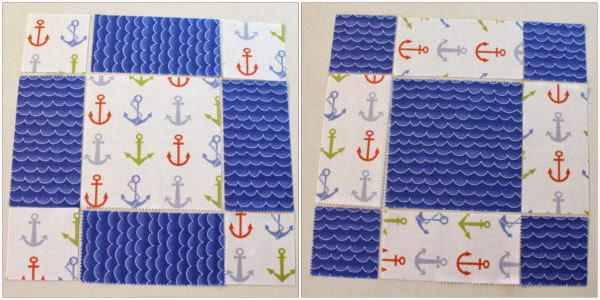 So, you have got your mini quilt ready and looking out for ways to attach them. Here you go with simple ways to join your quilts. The size of the quilt determines the pattern of binding. To start with 1/8-inch-wide single fold binding, cut the binding strips. For instance, if the size of your quilt is 15 x 15 inches, the total length required would be 70 inches. So, cut two long strips in exact halves and attach them to form a single piece. Now, begin sewing at 45-degree angle to stitch them together. As you reach the corner, make sure to leave 1/8-inch space at the edge of the fabric.
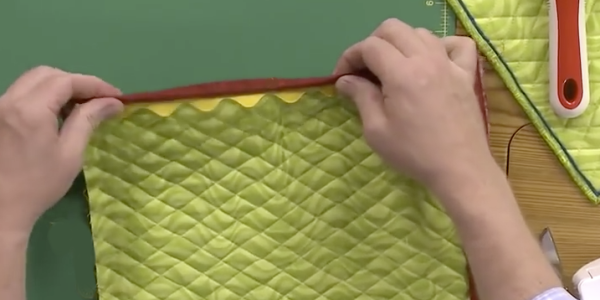 Most of us love quilting, but when it comes to binding, it becomes a nightmare. Now, there is a simple method to bind your quilts. First and foremost, calculate the quilt’s perimeter. Add the quilt’s length and width and multiply the resultant answer by two. Make sure to add an extra ten inch to accommodate the corner and seams. After calculating, divide the number by 40. As the perimeter of your quilt turns out to be 262 inches, divide 262 by 40. The answer would be 6.55. Now, cut seven fabric strips that will act as your binding pieces.
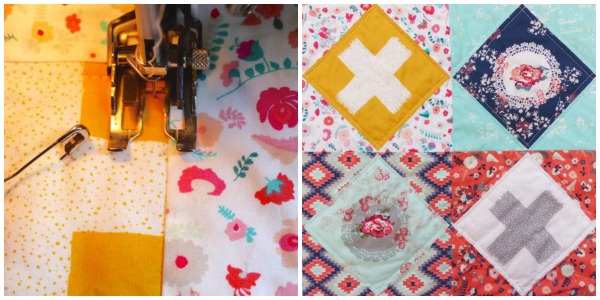 It is essential to understand the use of a presser foot for quilting with ease. First, form a quilt sandwich by attaching the quilt top, quilt backing, and quilt batting together. Make sure to have a larger batting and backing to accommodate the quilt top. The batting should be two inches bigger and the quilt backing one inch larger. After gathering the pieces, place the right side of the quilt backing downwards. Position the batting on top of the quilt backing. Eliminate the wrinkles and create a smooth surface. Center up the placement of the batting. Finally, place the quilt top above the batting by smoothing the surface.